
On Nickelodeon
[A specific] God is a [specific] woman

I. Νίκη
Nike is the goddess of victory. The name probably comes from a Proto-Indo-European word meaning “to attack”, but the goddess was there before the word was. Before humans had developed language, the gods were directing one tribe of grunters to go after another and take their big sticks, and Nike was there to guide her favorites, carrying them on her wings.
Her lineage is uncertain. Perhaps she was the daughter of a Titan, perhaps of Ares the god of war. As Athena began to identify herself with the military victories of the various Greek city-states, Nike became attached to Athena. But mere military victory was not enough for her.
Nike is the goddess of all victory. While pure military strength was enough for the hunter-gatherer tribes of the ancient Aegean, by the time the great city-states were formed Nike had invented other types of victory to be won. And so she was there among the gladiators and among the charioteers. She was there to give accolades to the greatest playwrights. She was there guiding the hand of the greatest musicians. While the generals asked for help from Athena while fighting the Persians, it was Nike that the charioteers called to as they rounded the final lap, watching as she dragged the horses forward, flying. “Nike!” is what the spectators called out. Athena was there to ensure that the cities remained standing and the people stayed alive, but Nike was there to make sure that their lives had meaning. The music, the theater, the games, all owed their success to her. And so the goddess’s name became synonymous with victory, and “nike” became the word for victory.
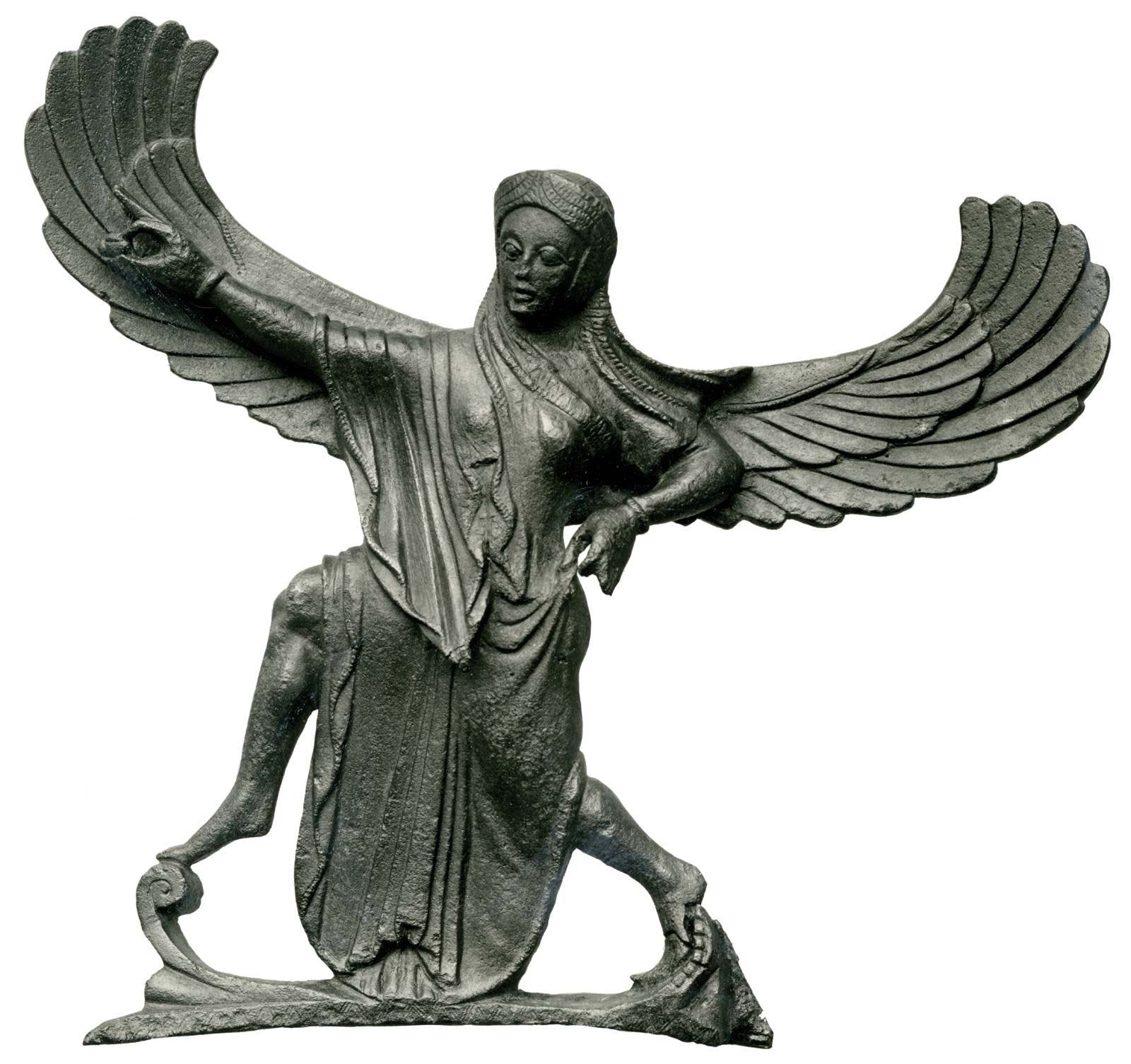
Nike was always depicted with wings. She often accompanied her more famous relatives, or offered trophies to athletes. Her gift of choice was a palm frond.
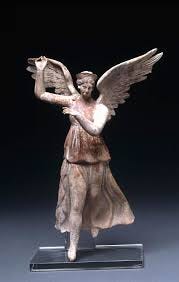
She’s also often seen holding a lyre, as in this depiction.
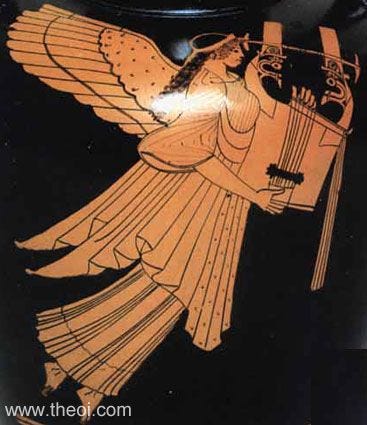
The lyre is so she can extol the athletes and the soldiers. She sang too. And where would a Greek goddess sing?
II. ᾨδεῖον
An odeon is a place where music happens. The Greek root ōidē means “song” (from where we get the word “ode”), and so a singing place is an Ōideion. This root is probably related to a Proto-Indo-European word for “to speak” (why the actual Greek word for “speak” is not related to this PIE word is left as an exercise for the reader). In contrast to the theatre, the odeon was much smaller and designed to better carry acoustics for singing. The odeons had smaller audiences than the theaters by definition - they were more intimate places.
When the Roman Empire brought Greece into the fold, they took her intellectual culture. The Greek gods all became Roman gods (Nike became Victoria, for one), and the odeon was adopted across the Empire. Odeons were built from France to Jordan, and served as concert venues and places for public readings. As the Empire collapsed in upon itself, the state could no longer support the odeons, and they fell into disrepair. But their memory remained.
III. Νικόλαος
Nikolaos is a Greek name, combining “nike” for “victory” with “laos” for people - “victor of the people”. There aren’t - or at least I haven’t found - any well-known Nikolaoses prior to the Christian era, but that’s not too unexpected. It’s likely that Nikolaos was a relatively uncommon name in Greece. Ironically, it took a Christian saint to turn the Greek goddess of victory into one of the most common male names.
Very little is concretely known about Saint Nikolaos (Anglicized as “Nicholas”). He lived in Greece in the late 3rd and early 4th centuries, right around the time that Rome was emerging from its crisis period and searching for a new identity. He became bishop of Myra and attended the Council of Nicaea (where he maybe did but probably didn’t slap Arius). But he became most well-known for his generosity to the poor, and in particular his secret gift-giving. He became one of the most popular saints after his death, and his cult spread throughout Europe as he became known as the patron saint of children, barrel-makers, travelers, sailors, fishermen, merchants, broadcasters, thieves who feel bad about their thievery, non-thieves who have been accused of thievery, brewers, pharmacists, archers, single people, lenders, prostitutes, and students, as well as the Greek and Russian navies. In Northern Europe, the gift-giving in particular became associated with him, and his feast day (December 6th) became a time to give gifts. Needless to say, he became a popular name-sake, and various forms of the name spread along with the legend of the saint.
Saint Nicholas died on the 6th of December in 343. Forty years later, the Christian emperor Gratian removed the altar of Victoria (the Roman name for Nike) from the Senate. The pagan senators howled in protest, but they had lost this battle. Another couple decades, and all pagan statues were removed from public spaces. Nike was disappearing from the European world, but her name would live on.
IV. Niccolò
Niccolò is the Italian form of Nikolaos, and gained its popularity as a name along with the saint. For our purposes, the Niccolò we are interested in was a 16th-century Florentine politician whose full name was Niccolò di Bernardo dei Machiavelli. Machiavelli lived during a very contentious time in Italian politics, and set about trying to develop a political philosophy for how to govern what often seemed like an ungovernable situation. His work was not looked upon kindly and, fairly or not, he became synonymous with acquiring power by any means, acting unscrupulously, and betraying the interests of the common people in favor of those of the rulers. He was so hated that “machiavellian” today is a synonym for politically unscrupulous. But it wasn’t just his last name that acquired this meaning.
V. Old Nick
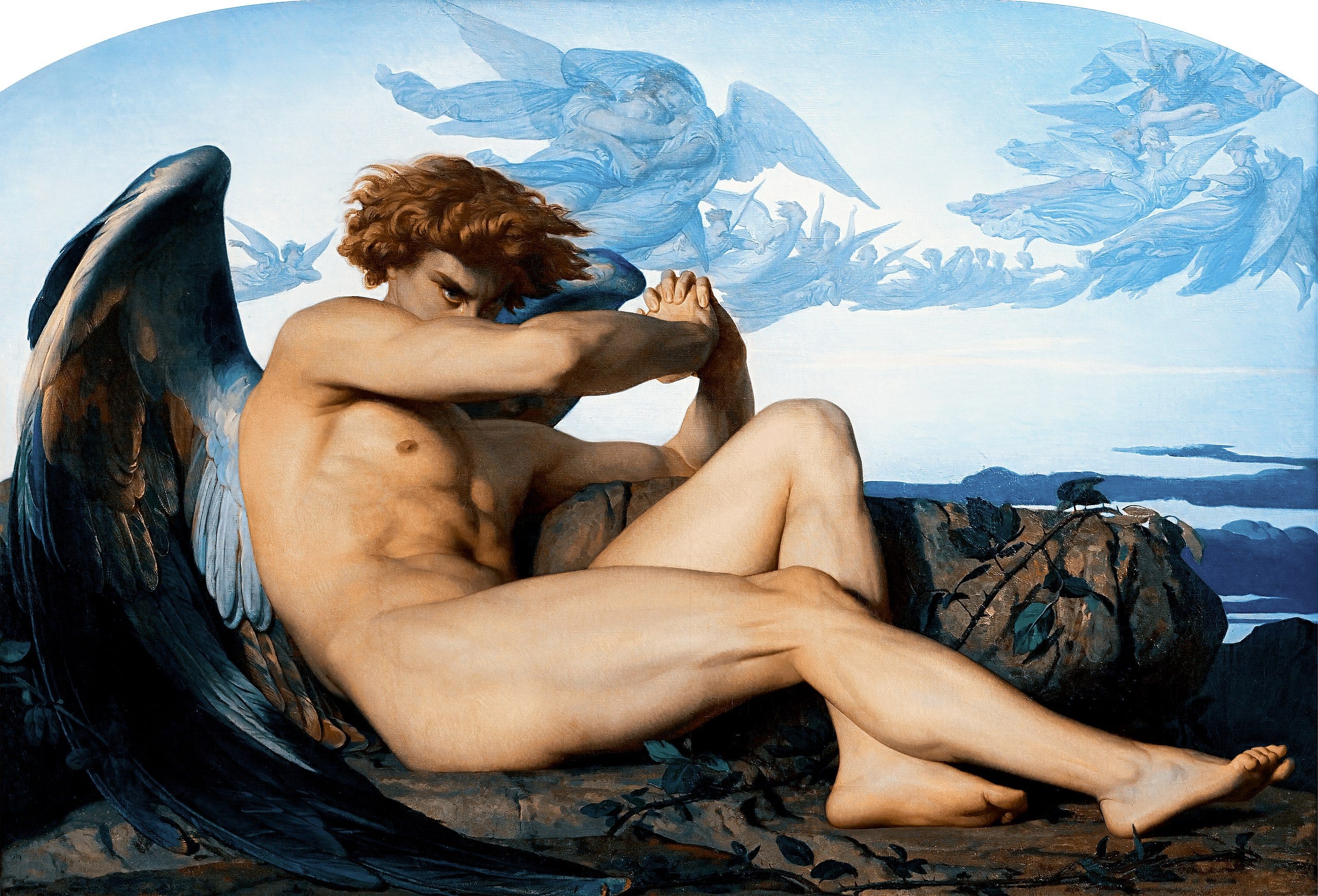
You know who else in 16th-century Europe was known for acquiring power by any means, acting unscrupulously, and betraying the interests of the common people in favor of those of the rulers? And who had been called “The Prince” for centuries before then? That’s right! It’s Satan, Lucifer, Beelzebub, the Father of Lies, the Devil himself. He of the cloven foot. It was well known that, just as Satan whispered in Eve’s ear to tell her to disobey God, so too did he whisper in the ears of princes, kings, and especially popes. And so just as “machiavellian” became an adjective for this Satanic behavior, Niccolò’s first name became another of the Devil’s, who now added “Old Nick” to his rather impressive list of names.
This mainly took root in Northern Europe, where Protestantism had taken hold and people were eager to shed superstitions. It had not escaped the notice of the Protestants that an awful lot of Christian saints seemed to just be the old pagan gods under different names, and that an awful lot of Christian holidays seemed to be old pagan festivals under different names. Luther led the movement to replace Saint Nicholas Day with Christ-Child day (Christkindl in German, which then gets Americanized into “Kris Kringle”, in case you were wondering how successful he was in ditching Good Old Saint Nick). All of which to say that, while Old Nick was moving north as a name for the Devil, Saint Nick was on his way out, and the name became associated with the tricky aspects of Satan1. In German, this word was “nickel”.
VI. Kupfernickel
At the same time that Germany was undergoing the Reformation and Machiavelli was experimenting with politics, copper mining was booming. Copper was an incredibly useful mineral, and Europeans had long known how to manipulate it. The center of copper mining in Europe was in the Ore Mountains (named, as one may guess, from the ore) in Saxony. In the mid-18th century, Saxon miners in the Ore Mountains discovered a new lode that looked very much, if not exactly, like copper, and set about extracting it. The metal turned out to not be copper at all, though, and trying to smelt it caused the release of arsenic, poisoning the miners. They called the mineral “kupfernickel”, or “Devil’s copper”, and spread the word throughout Germany not to fall for Satan’s tricks.2
Eventually, word of the Devil’s copper made its way up to Sweden, where a chemist named Baron Axel Fredrik Cronstedt was intrigued and decided to try and extract the copper himself. He discovered the same thing the miners had - kupfernickel contained no copper - but found that he could produce a different metal altogether. He presented his findings to the Swedish Academy of Sciences in 1751, and gave the metal its new name: nickel, a shortening of kupfernickel. The demonic associations left behind, nickel was now just a metal.
In the decades after gaining its name, nickel was thought to be a rare metal. But in the 19th century, new processes for extracting it were developed, and nickel became a plentiful, cheap, metal.
VII. Odéon-Théâtre
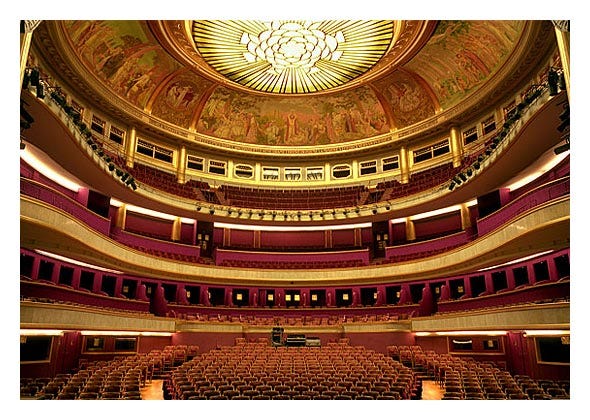
And while the mining industry was expanding in Europe, so too was the entertainment industry. The huge Roman state-sponsored entertainment events were a thing of the past, but entertainment didn’t go away. Plays continued to be massively popular, and the various feudal leaders and church officials sponsored them when they could, but the building of specific theaters for specific troupes would require a new consolidation of state power.
In 1680, Louis XIV (aka the platonic ideal of “consolidation of state power”) merged two troupes to create the Théâtre-Français, an official acting troupe of France. The troupe received a royal grant and performed royal-approved works, becoming an institution of the state as the state became more and more centralized. In 1780, the future King Louis XVIII inherited a plot of land and donated it to the troupe, along with plans for a building. Two years later, the troupe moved into this building, which was named the Théâtre-Français after the troupe. Marie-Antoinette inaugurated the building.
Over the years of the Revolution, the name of the theater changed based on the prevailing political winds. When the liberals monarchists took charge, the theater became the Théâtre de la Nation. After the radical republicans gained control and decapitated both king and queen, it became the Théâtre de l'Égalité. And in the confused regime of the Directory, the theater needed a new name. Not one that would tell the political story of the Directory (which didn’t really have one), but one that would call back to a higher story of theatre. And in the atmosphere of the Enlightenment, nothing was a higher story than Ancient Greece. So in 1796, the theater got a new name: the Odéon. Freed from the political winds of the Revolution, the name would stick despite multiple fires and Napoleon’s renaming attempts. The Odéon was the preeminent theater in Paris and became a byword for high culture.
VIII. Nickel
We now go across the ocean to the newly established United States, still finding its bearings. In 1792 the first mint was established in Philadelphia, and with it a number of standard coins made of gold (for the eagle), silver (for the dollar, half dollar, quarter dollar, and dime3), and copper (for the penny). Throughout the next seventy years, various coinage acts were passed that changed the composition of silver and gold in the extant coins, but no new metals were introduced (nor was any paper money authorized).
The Civil War changed this. Shortages of gold, silver, and even copper caused currency hoarding, and the government responded by introducing paper currencies. After the war, when trying to re-introduce metal coinage, the government was looking for alternate sources. Joseph Wharton (founder of the Wharton School at UPenn) had recently bought a number of nickel mines, and so lobbied hard in favor of nickel. He won out, and the new 5-cent coin was to be composed mainly of nickel. As the word “half-dime” was already in use by a silver 5-cent coin, the new coins were simply called nickels.
IX. Dime Museum
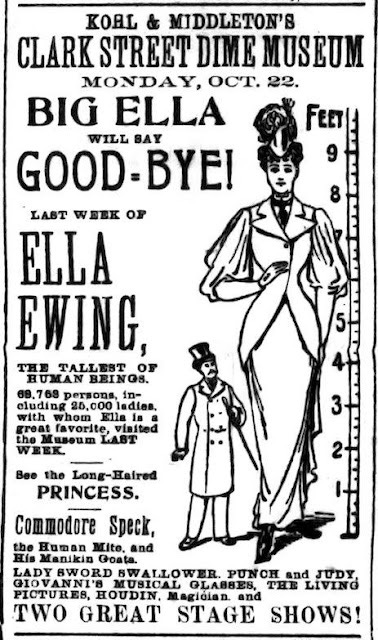
As the economy roared back to life with the Industrial Revolution in the years after the Civil War, and as huge numbers of immigrants poured into the United States from Europe, new forms of cheap entertainment became in high demand. The 19th century saw the museum come into its own as a way to guide “high culture” - showcasing artifacts and exhibits that told the story of a nation (or, more often than not, the stories of other nations that had been conquered). Many enterprising showmen realized that the model of a museum could be easily copied, but with less expensive artifacts to showcase. P.T. Barnum was the master of this, and his American Museum - first opened in the 1840s - gathered all sorts of attractions to show to whoever wanted to see them.
Barnum’s model was copied and those models were themselves copied, and at each stage the quality of the “exhibits” went down while the advertising remained the same. These museums ran on the cheap, paying little to acquire their artifacts (or just lying about the rarity of the items they had on hand), and charging little for admission. They soon acquired the name “dime museums” for the 10¢ entrance fee, and many leaned into this nomenclature.
IX. Nickelodeon
As the new entertainment of motion pictures came into vogue in the early 20th century, there was a demand for “low culture” movies. John Harris planned to open one of these theaters in downtown Pittsburgh, and needed a name for it. Playing off the dime museums and the famous theater in Paris, Harris was going to call the theater the “dime Odeon”. But a dime was too expensive for his preferred clientele, so he halved the price and the Nickelodeon was born. It was a hit, and soon other nickelodeons started popping up in other cities. The nickelodeons showed short silent films for a nickel. They were wildly popular in the first couple decades of the 20th century, but fell out of favor as larger auditoriums and longer films necessitated raising prices and increasing the amenities of the theaters. By the 1930s, nickelodeons had fallen out of favor.
And in 1979, a new satellite television station aimed at children launched and took as its name the 5-cent theaters from fifty years ago.
X. Νίκη-ελα-ωδεῖον
And now we return to Nike. Because one of the things that characterizes Nike is her patience. She will never give up. You may think that you have won, but gods are not so easily beaten. The Roman legions took this to heart - an opposing army might destroy a legion or two, but they would never win the war. The Romans would just raise another one, cheering the name of Nike as they entered the field again. When the new religion began evicting the worship of Nike, and the statues of Nike, and the invocations of Nike, her followers thought she had lost. They were wrong.
A few centuries is nothing to a god.
While the outright worship of Nike ceased, her name stayed. It was she who led St. Nicholas and the Nicenes in their victory over the Arians. She marched with the Florentines in their endless wars in northern Italy and she marched with the Union armies as they despoiled Georgia. And she waited until people were ready to put away the new religion and worship the old gods once more.
Nike is the goddess of victory, and an odeon is a place for singing. In around 1993, it was time to call her in. The Greek word for “come” is “ελα”. Anglicize that, and you get “ela”. So to call Nike to come to her odeon and sing, you tell her “Nike-ela-odeon”4. Now say that fast.
Nickelodeon is a place where the goddess of victory is summoned to sing. She had been planning her comeback for millenia, and now the time came to reveal herself. She wasn’t very subtle about it, either.

Ariana Grande’s first appearance in the public eye was at an arena. When she was five years old, she went to two separate Florida Panthers hockey games, and in each game she was struck by a puck that escaped the ice. You can calculate the odds of that happening without some divine intervention - they’re quite small. The Panthers repaid her by letting her ride the Zamboni at the opening of their new stadium. She greeted the athletes, she waved to the crowd.
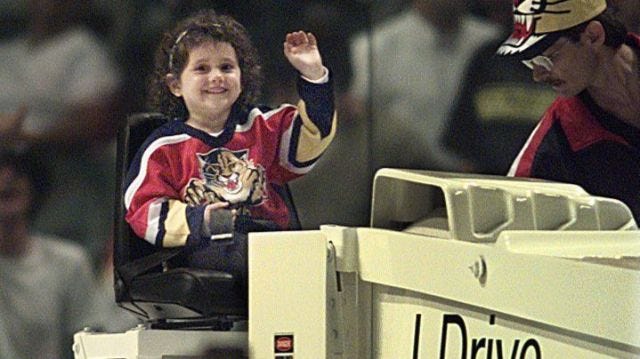
Then she brought out the lyre. She would sing the national anthem for the Panthers5 many times. Nike was back.
A true Ariana Grande stan will no doubt have much more to say here6. For our purposes, we’ll only note that she took a supporting role in a sitcom and used it to become by far the most famous person out of Nickelodeon. Not as an actor (they use the theaters, not the odeons), but as a singer. And she did it through a show that was literally called Victorious.
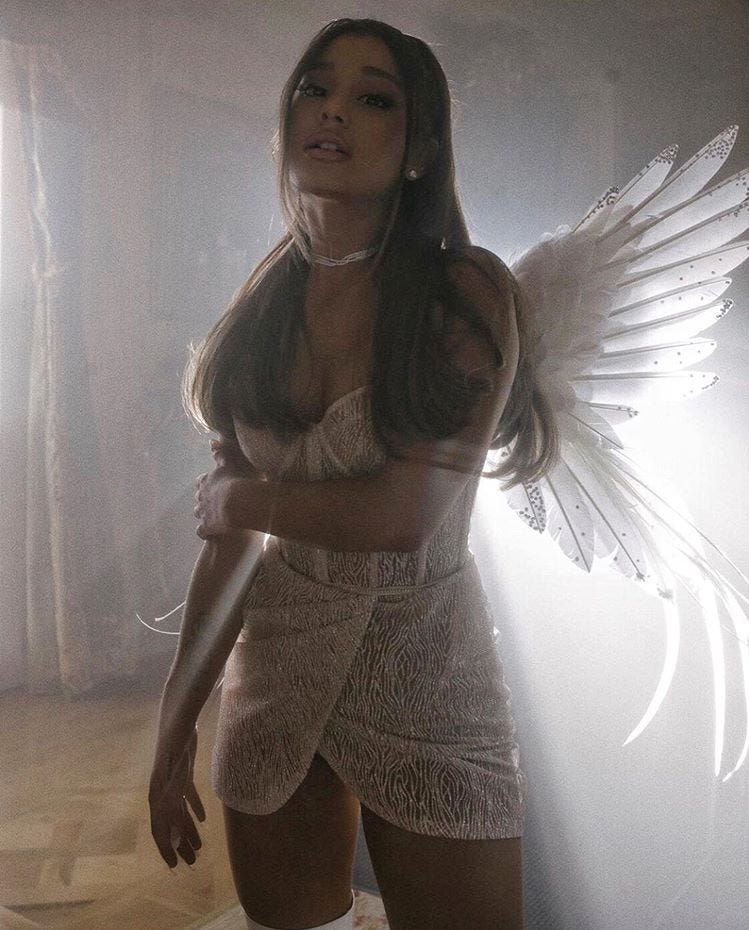
The only conclusion one can reasonably draw here is that Ariana Grande is the goddess of victory. Not a symbol of victory, not a sign of how far a woman can go when she is determined, but the literal, actual, Nike. And she’s been telling us for a while.7
Separately, there was a German creature, a water sprite, called a nikker. The name may have some connection with these creatures, but it seems rather unfair to associate them with the Devil. And as our goal here is to track the movements of Nike, it seems beneath her to associate with German water sprites.
Copper wasn’t the only word to get the "-nickel” suffix from its demonic associations. Pumpernickel, the German bread, means literally “Devil’s fart”, either because of the indigestion the poor bread would give those who ate it, or the color of the (again, poor in nutrition) bread itself.
Dime was originally “disme”, the French word for “tithe”, meaning “tenth”. Over time the s was dropped.
Not entirely grammatically correct.
Who, by the way, just won the Stanley Cup for the second year in a row. She’s getting more powerful.
As will a true hater, to which I will respond only that everything you dislike about Ariana - the homewrecking, the bizarre changes in her racial appearance, the odd flirtation with eating disorders, etc. - are also charges that were levied against Nike by poets throughout the years. You can hate on Nike, but you can’t deny her.
There may be more going on here, though. Searching for “Ariana Grande” with “Nike” gives pictures of her in the shoes, with “Victoria” gives her at Victoria’s Secret shows, and with “goddess” gives, well, what you’d expect. Somebody is trying very hard to conceal the truth.